Why do retired LEGO® sets cost more? What actually drives their price

Retired LEGO® sets often cost more than they did in stores because the supply is fixed the day production stops, while collectors, fans and gift buyers keep looking for them. Research on the secondary market backs this up on average, but it also shows wide differences between sets. Some retired sets climb a long way, some barely move, and some fall below their original price.
The short answer
- Supply is fixed: once a set retires, production stops, stores sell through, and the only place to buy it is the secondary market. HSE’s summary says prices usually start to grow two or three years after retirement.
- Demand carries on: popular movie themes, large display sets for adults, rare minifigures, exclusives and nostalgia keep people looking.
- The research: Dobrynskaya and Kishilova found an average return of at least 11% (8% in real terms) from 1987 to 2015; a 2020 study by Shanaev and co-authors found 1.20% per year after inflation.
- Not guaranteed: some sets lost value, fees and storage cut into any gain, and LEGO can re-release a model, as it did with the Taj Mahal.
Retirement cuts off the supply
LEGO sets are not made forever. In their study of the LEGO secondary market, economists Victoria Dobrynskaya and Julia Kishilova note that sets usually retire after one to two years in production. Before that happens, LEGO.com flags them in a “Retiring soon” section, which the company describes as sets that “will be officially retired very soon.”
Once a set retires, the supply only goes one way:
- Production stops. No new boxes are made.
- Stores sell through. Whatever stock LEGO and other retailers still hold sells out, and no new stock follows.
- Sealed copies get opened. Sets are made to be built. Every box that gets opened is one fewer sealed copy for the next buyer, and it cannot be sealed again.
After that, the only place to buy the set is the secondary market, where price is set by how many sellers have a copy and how many buyers want one. The same study observes that a set’s secondary market price “tends to jump up significantly” once it is retired. HSE University’s summary of the research adds that prices usually start to grow two or three years after retirement.
What keeps demand going
Scarcity alone does not raise a price. People have to keep wanting the set. Several things keep demand alive long after a set leaves stores.
Popular themes and licences
Dobrynskaya and Kishilova found that themes based on popular movies tend to do better, and HSE’s summary says sets based on “famous buildings, popular movies, or seasonal holidays” saw the highest growth. The study calls Star Wars sets the most popular targets of LEGO fans, collectors and investors. In the working paper’s breakdown by theme, LEGO Ideas (only eight sets in the sample) and Seasonal sets had the highest average returns.
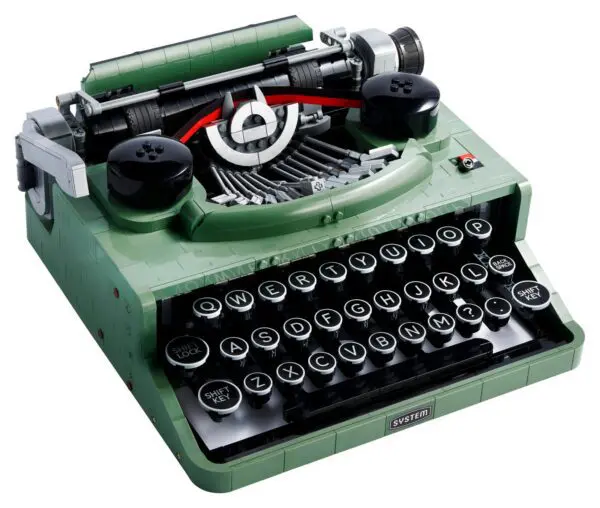
Ideas sets start as fan designs submitted to LEGO, so each one tends to be a one-off subject. The Typewriter (21327) is a retired Ideas set from 2021 with 2,079 pieces and an original US retail price of $249.99.
Large display sets for adults
The study found that small sets and very large sets grew faster than medium-sized ones. HSE’s summary offers a likely reason: small sets often contain unique parts or figures, while big ones are produced in smaller quantities and appeal more to adults. Adult buyers are a large part of the market. In its 2025 results, the LEGO Group said demand was high “among both children and adults,” and named LEGO Icons and LEGO Botanicals among its most popular themes.
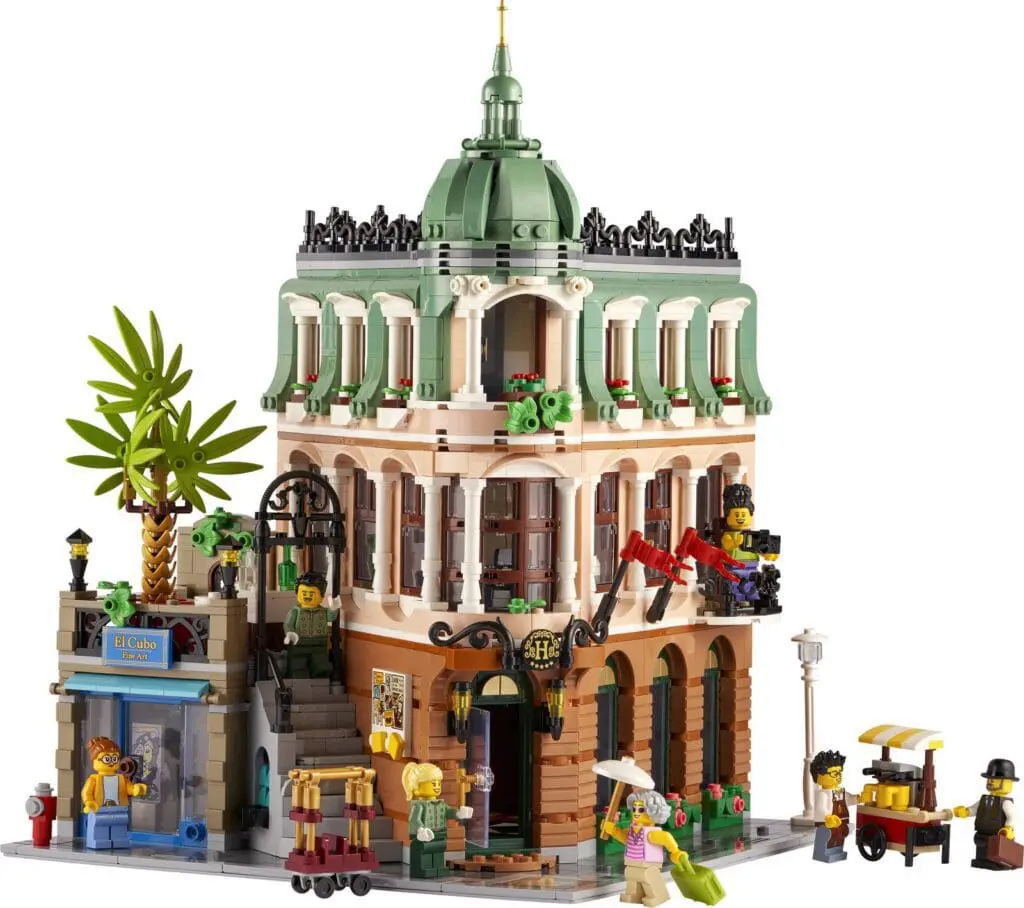
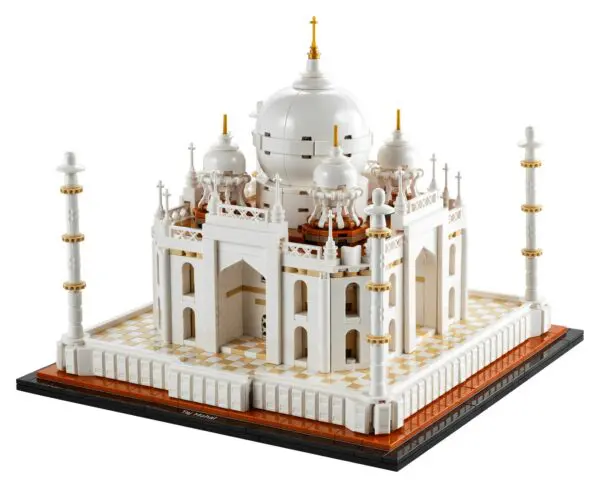
The Modular Buildings are a classic adult display line. The Boutique Hotel (10297) is a retired Icons modular from 2022 with 3,066 pieces and 7 minifigures, originally $229.99 in the US. Architecture is another adult-focused line: the Taj Mahal (21056), a retired Architecture set from 2021, has 2,022 pieces and was originally $119.99.
Minifigures, exclusives and limited runs
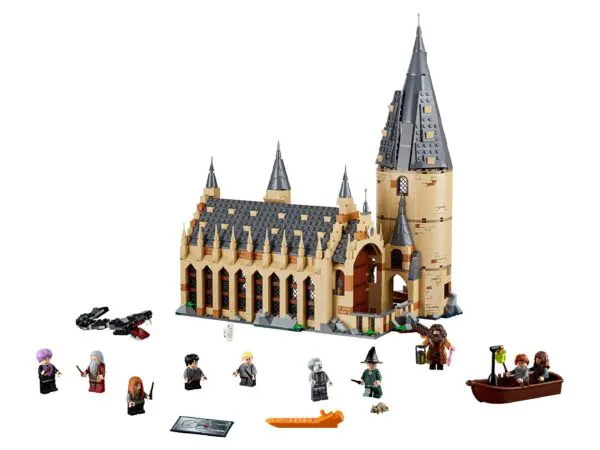
Minifigures are collected in their own right. The study notes that some minifigures are so rare that they “cost a fortune on the secondary market.” Sets with several figures that only appeared in that set give completionists a reason to track them down. The Hogwarts Great Hall (75954), a 2018 Harry Potter set, came with 10 minifigures in 878 pieces at an original price of $99.99.
Exclusivity matters too. According to HSE’s summary, sets “issued in limited editions or distributed at promotional events” are another attractive category, because “rarity increases their value from the collectors’ perspective.”
Nostalgia
Many buyers are adults looking for the sets they had, or wanted, as children. Dobrynskaya put it this way in HSE’s summary: “Sets produced 20-30 years ago make LEGO fans nostalgic, and prices for them go through the roof.”
What the research actually found
The best-known study is “LEGO: The Toy of Smart Investors” by Victoria Dobrynskaya and Julia Kishilova of HSE University, published in Research in International Business and Finance (Volume 59, 2022). It looked at 2,322 sets and used prices for new sets only. Its headline result: LEGO sets yielded “the average return of at least 11% (8% in real terms)” over the sample period 1987 to 2015, which the authors say beat large stocks, bonds and gold.
That average hides a very wide spread. In the working paper, average returns on individual sets ranged from about -54% to 613% per year. Around 90% of sets had positive average returns, and fewer than 10% lost value. The press coverage picked up the big numbers, but the authors were careful about what the data could and could not show:
- The data is limited. Prices came from BrickPicker, which averaged recent eBay sales. For each set the authors only had the original retail price and a 2015 market price, and they said their index before 2000 should be used “for illustrative purposes” only.
- Fees were not included. The returns ignore transaction costs. Taking out eBay’s selling fee alone (9.15% in the toys category at the time) cut the average return on individual sets from 18.5% to 14.7% per year in the working paper, before storage and other costs.
- It did not beat the broad stock market. The working paper found that LEGO slightly underperformed the broad US stock index over the same period, and its estimated extra return was not statistically significant.
- It takes time and knowledge. HSE’s summary says the authors consider LEGO worthwhile “only in the long term (i.e., over three years).” The paper concludes the market “is not as liquid as the stock market” and requires knowledge “which not all investors possess.”
A second study points to a much lower figure. Savva Shanaev and co-authors, writing in the Journal of Risk Finance in 2020, studied 10,588 sets from 1966 to 2018. Their value-weighted LEGO index, adjusted for survivorship bias, returned 1.20% per year after inflation, well below the 5.54% for equities. They still found that LEGO could help diversify a portfolio, and that buyers get enjoyment from owning sets that is separate from any financial return.
Note: The fair reading of both: retired sets have, on average, held or gained value over long periods, but results depend heavily on the set, the method and the costs. NPR’s coverage of the HSE study ended on the same note, reporting that Dobrynskaya cautioned high returns “aren’t guaranteed.”
What changes a retired set’s value
Two copies of the same retired set can sell for very different amounts. The main factors:
- Sealed or opened. Price guides track new and used sets separately. The HSE study used new-condition prices only, defined as a complete set with its contents sealed in factory bags.
- Box condition. Even among new sets, the study notes that box condition “may vary from excellent and sealed to damaged.” If box condition matters to you, ask before you buy.
- Completeness. For opened sets, missing pieces, minifigures or instructions lower what a set is worth to a collector.
- Rare minifigures. A set with figures that never appeared elsewhere has an extra layer of demand.
- Exclusivity. Limited editions and promotional sets were singled out in HSE’s summary as more valuable to collectors.
- Re-releases and remakes. LEGO sometimes brings a model back.
Note: The best-known re-release is the Taj Mahal. The original set 10189 launched in 2008 with 5,922 pieces at $299.99 and became one of the most expensive retired sets. The HSE working paper lists it among the five most valuable sets in its data as of December 2015. In 2017 LEGO announced set 10256, a near-identical version with 5,923 pieces at $369.99. Coverage at the time framed it as bad news for resellers holding the original. FBTB ran the headline “LEGO Announces 10256 Taj Mahal Re-release, Resellers Cry,” and The Rambling Brick wrote of the “retreat of the speculators.” The lesson is simple: a retired design is only scarce for as long as LEGO chooses not to make it again. (The Architecture Taj Mahal mentioned above is a different, smaller model.)
An honest caution before you buy
Retired sets are fun to own and some do rise in value, but they are not a sure thing. A few points worth keeping in mind:
- Not every set goes up. Both studies found large differences between sets, and some lost money.
- Selling costs money. Marketplace fees, shipping and packaging come out of any gain.
- Storage takes space. The HSE authors point out that keeping boxes for years needs room, and the costs are higher than holding financial assets.
- Fakes exist. NPR reported in 2020 that knockoff versions of big sets were sold online, and that BrickPicker linked a drop of more than 30% in the price of the original Millennium Falcon to fakes flooding the market. Buy from sellers who stand behind authenticity.
- Re-releases can happen. As the Taj Mahal shows, LEGO can bring a model back.
Note: This article is general information, not investment advice. Past prices do not predict future ones. The safest reason to buy a retired set is that you, or the person you are buying for, will enjoy it.
Buying a retired set from Brick District
Our sets are new and factory sealed unless the listing says otherwise. Each listing shows its current price and stock, and the “Ask about this set” button on it reaches us with any question. At checkout you can add shipping insurance on rare and retired sets.
Frequently asked questions
Do all retired LEGO sets go up in value?
No. The HSE working paper found most sets in its sample had positive average returns, but some lost value, and a later study using a different method found a much lower long-run average.
How soon after retirement do prices rise?
HSE’s summary of the research says secondary market prices usually start to grow two or three years after a set retires. Individual sets can behave very differently.
Is a sealed set worth more than an opened one?
Price guides track new and used sets separately, and collectors generally prefer sealed copies. For opened sets, completeness of pieces, minifigures and instructions matters.
Can LEGO bring a retired set back?
Yes. The Taj Mahal 10189 from 2008 returned as set 10256 in 2017. A re-release adds new supply, which can affect what buyers will pay for the original.
Sets in this guide
-
 Retired
-
 Retired
-
 Retired
-
 Retired