How to store sealed LEGO® sets without damaging the box

To store a sealed LEGO® set well, you mostly need to protect the box. It is the cardboard that fades in sunlight, softens and warps in damp air, and dents when another heavy box sits on it. The best place is a dark, cool, dry room inside the air-conditioned part of your home, with boxes on solid shelves off the floor and little stacked on top. Garages, attics, sheds and parked cars are the places to avoid, especially in a hot, humid state like Florida.
The short answer
- Protect the box: it is the cardboard that fades in sunlight, softens and warps in damp air, and dents when another heavy box sits on it.
- Where: a dark, cool, dry room inside the air-conditioned part of your home. Avoid garages, attics, sheds, basements and parked cars.
- Humidity: the National Archives recommends below 65% relative humidity, and the EPA below 60%, ideally between 30% and 50%. A humidity meter tells you where you stand.
- Shelving: solid shelves off the floor, heaviest boxes at the bottom, short stacks, large boxes flat, and protectors in polyethylene, polypropylene or polyester, not PVC.
Why box condition matters when you store sealed LEGO sets
Collectors judge a sealed set by its box as well as its seals. Nerdcube’s guide to LEGO set values describes MISB (mint in sealed box) as “brand new, sealed, no signs of wear on the box,” and NISB as “sealed but with imperfections.” It is also honest that tastes differ: for some collectors “the perfect box is essential,” while others care nothing about the packaging. Either way, storage damage is hard to undo, and the Canadian Conservation Institute (CCI) calls light fading “utterly irreversible.” To check whether a box has ever been opened, see our guide on how to tell if a LEGO set is factory sealed.
Keep sealed LEGO boxes out of the light
The CCI explains that light fades, or “bleaches”, colours, and that ultraviolet (UV) light “causes yellowing, chalking, weakening, and/or disintegration of materials.” The damage builds up, because the total dose is light intensity multiplied by hours of exposure. On a sunny shelf, the side of a box facing the window takes the most light, so it tends to fade first and unevenly. The CCI observes that light-sensitive objects often survived best in “dark forgotten places, boxes, envelopes” and similar. A closed cupboard, a wardrobe or an opaque storage box in an interior room does the same job.
If you display sealed sets, keep them away from windows, which the CCI calls “notoriously tricky places” because the light is intense. Use blinds against direct sun and choose LED lighting, which the CCI rates as very low in UV. UV filters help, but visible light still fades printed colours, so for long-term storage the darker the better.
Heat: keep sealed LEGO sets out of the attic and the car
The LEGO Group’s own storage advice says “it’s best not to store them in direct sunlight, or where the temperature exceeds 104° F (40° C) as this may cause bricks to become brittle or discolor over time.” Sun can push surfaces far past that: the CCI notes that on a warm summer day, dark surfaces facing the sun can reach 75°C (167°F). Heat also weakens glue, and in the CCI’s temperature table various PVA glues “soften significantly, lose strength” above 30°C (86°F). That is worth knowing when a box is held together by glued flaps and adhesive seals. The CCI’s rule of thumb is that “each reduction of 5°C doubles the lifetime of the object,” so cooler is always better.
Watch out: The US National Archives advises keeping stored items “out of damp basements, garages, and hot attics” and below 75°F. Do not leave a set in a parked car longer than you must, and keep boxes away from sunny exterior walls, heaters and water heaters.
Humidity: storing sealed LEGO sets in Florida
Damp air is the bigger risk in a humid climate. Cardboard is paper, and the CCI lists “paper and parchment cockle” among the effects of damp, which it puts at over 75% relative humidity. Damp boxes also invite mould. The National Archives recommends keeping relative humidity below 65% “to prevent mold growth and reduce insect activity,” and the US Environmental Protection Agency (EPA) advises below 60%, ideally between 30% and 50%. The National Archives also warns that humidity below 15% can make paper brittle, so aim for steady and moderate rather than bone dry.
Tip: A University of Florida IFAS Extension publication notes that during rainstorms “the air conditioner often does not operate long enough to adequately control the indoor relative humidity,” and that long spells above 70% can lead to mould “especially in stagnant air spaces such as closets.” An inexpensive humidity meter from a hardware store tells you whether your storage room is actually dry. If it reads high, the EPA suggests air conditioners or dehumidifiers. Keep boxes off the floor and away from pipes, windows and known leaks, as the National Archives advises.
Stacking sealed LEGO sets without crushing the boxes
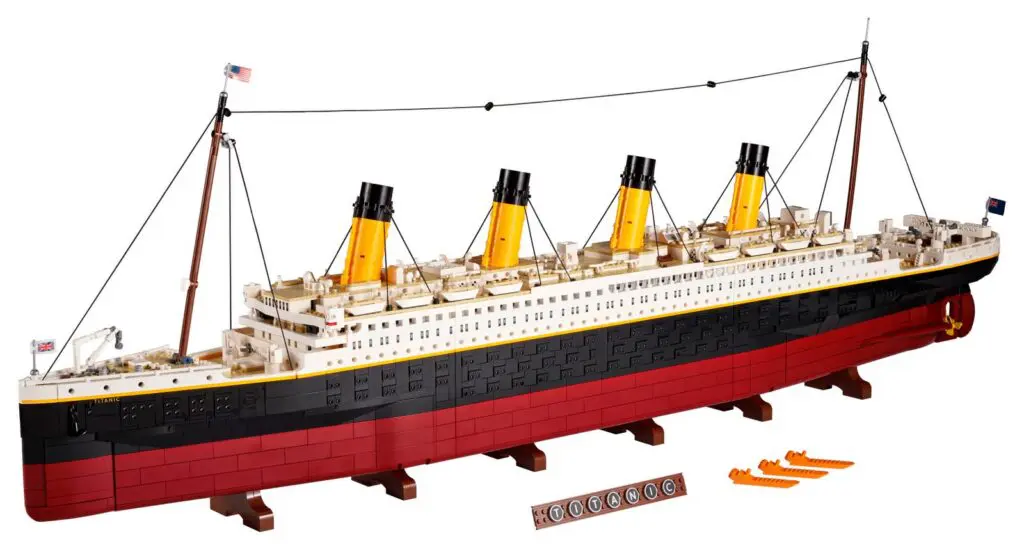
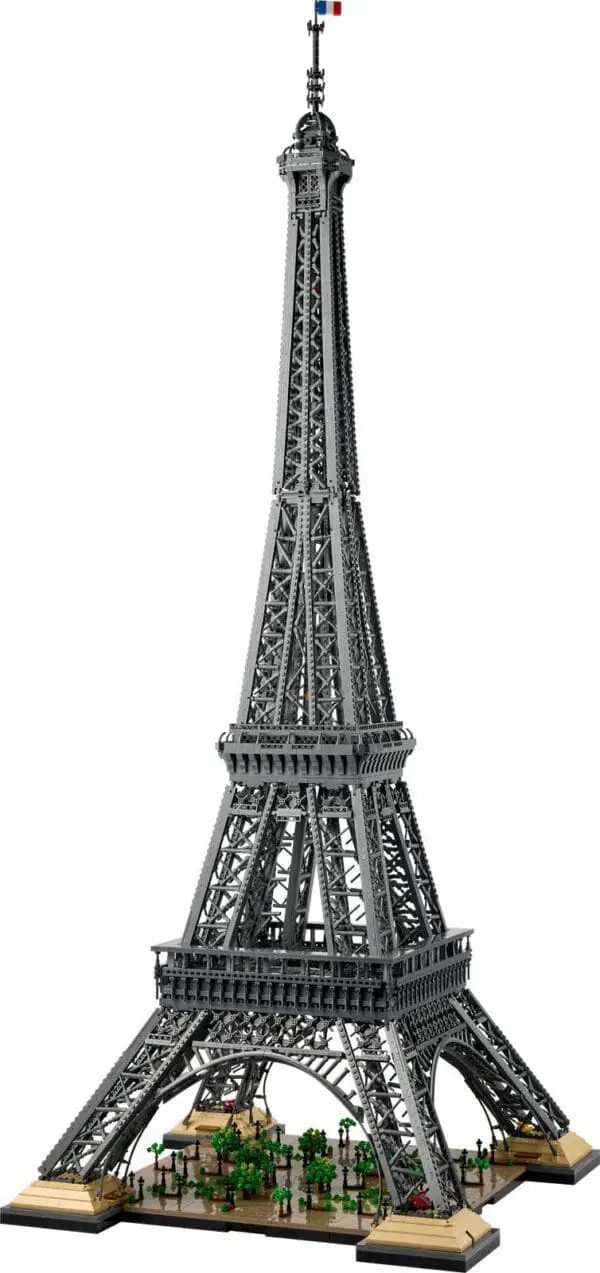
The CCI points out that when packages are stacked, “compressive loads are applied to the lower items of the stack.” Big sets make that load heavy. The BrickLink catalog lists the Titanic (10294) at 14,000 g, about 31 lb, in a box of 58.5 x 47.5 x 38.5 cm (roughly 23 x 19 x 15 inches). The Eiffel Tower (10307) comes in a box of almost the same size at 11,680 g, and the Millennium Falcon (75192) is listed at 13,150 g. Those are boxed-set figures, not the built models, and a box that heavy can easily dent the lid of a smaller set beneath it.
Put the heaviest boxes on the bottom shelf and stack only boxes of the same footprint, so the weight rests on the edges rather than the middle of a lid. Keep stacks short and add shelves instead of building taller piles. A solid shelf spreads the load more evenly than wire racking, and it should be deep enough that no part of a box hangs over the edge. Leave a little space between boxes so you can lift one out without dragging it.
Flat or upright?
Large, heavy boxes are best stored flat, front face up, so the contents rest on the base and nothing presses on the printed front. Slim boxes can stand upright like books, as long as they are packed snugly enough that they do not lean or bow. Either way, keep each box square to the shelf and do not wedge it in so tightly that the corners are pressed. If a slim box starts to bow, lay it flat instead.
Box protectors for sealed LEGO sets
A clear box protector keeps off dust, scuffs and fingerprints, and takes knocks that would otherwise land on the corners. The Library of Congress lists polyethylene, polypropylene and polyester (PET) as “stable and inert plastics” and advises avoiding PVC “and other unknown plastics.” For cardboard storage boxes, it recommends acid-free and lignin-free board. A protector should fit closely without squeezing the box, and it does not stop light on its own.
Watch out: Plastic tubs can backfire in damp places. The Library of Congress warns that “the combination of a plastic storage container in an area of high humidity increases mold risk,” and the CCI says plastic covers over damp floors “will trap the damp.” A tub is fine in a dry, air-conditioned room, but it will not make a humid garage safe.
Keep the seals intact in storage
Tip: Never put tape, stickers or labels on the box itself, and leave old price stickers alone rather than risk tearing the print by peeling them. Lift a large box by supporting its base with both hands, not by gripping the lid or a flap. Avoid sliding boxes across each other, which scuffs seals and edges. As our sealed-box guide explains, a scuffed or loose seal makes buyers ask questions even when a box has never been opened.
Pets, smoke and smells
Cardboard picks up the smell of the room it lives in. An Archives Society of Alberta guide notes that paper-based records “can easily absorb odours from their surrounding environment,” and that tobacco smoke is a frequent problem. Store sealed sets away from smoking areas, kitchens and fireplaces, and out of reach of pets that scratch, chew or shed on boxes. The CCI adds that rodent activity is “strongly associated with food availability” and that clutter gives pests shelter, so keep food out of the storage room and check your boxes every few months.
Labels, records and insurance for sealed LEGO sets
Label the shelf, the protector or an outer storage box, never the LEGO box itself. For each set, record the set number and name, where and when you bought it, what you paid and its condition on arrival. State Farm’s guide to insuring collectibles recommends recording item details, condition and purchase information, with “images from multiple angles” and receipts, kept “somewhere secure and separate from the collection.” It also notes that a homeowners or renters policy “may provide some coverage” for collectibles, but certain types of property may have specific limits. Ask your insurer what is covered, and photograph all six sides of each box when you store it.
A quick checklist for storing sealed LEGO sets
- A dark, cool, dry room inside the air-conditioned part of the house.
- No attic, garage, shed, basement or car.
- Humidity checked with a meter, with air conditioning or a dehumidifier if needed.
- Solid shelves, off the floor, heaviest boxes at the bottom, short stacks.
- Large boxes flat; slim boxes upright and snug.
- Protectors in polyethylene, polypropylene or polyester, not PVC.
- No tape or labels on the box; away from smoke, pets and food.
- Photos, receipts and records kept somewhere else.
Buying a sealed set from Brick District
Our sets are brand-new and factory sealed unless clearly stated otherwise, as our FAQ says. If box condition matters to you, use the “Ask about this set” button on the listing and we will reply with current availability and price. Many sets in our guide to the biggest retired LEGO sets in stock come in heavy boxes, so plan the shelf space. At checkout you can add shipping insurance on rare and retired sets.
Frequently asked questions
Is a garage OK for storing sealed LEGO sets?
It is best avoided. The National Archives advises keeping stored items out of garages, hot attics and damp basements, and in Florida a garage is often both hot and humid.
Should sealed LEGO boxes be stored flat or upright?
Store large, heavy boxes flat with the front facing up. Slim boxes can stand upright if they are packed snugly so they do not lean or bow.
Will a clear box protector stop fading?
Not on its own. A protector guards against dust and knocks, but light still reaches the box. Keeping the set in the dark is what prevents fading.
Are plastic storage tubs a good idea?
Only in a dry room. The Library of Congress warns that a plastic container in a humid space increases the risk of mould.
Sets in this guide
-
-
 Retired
-

Set 75192 · Star Wars
Millennium Falcon
7,541 pcs · 2017
$1,099.99 Add to cart about Millennium Falcon